Elements of Deisgn
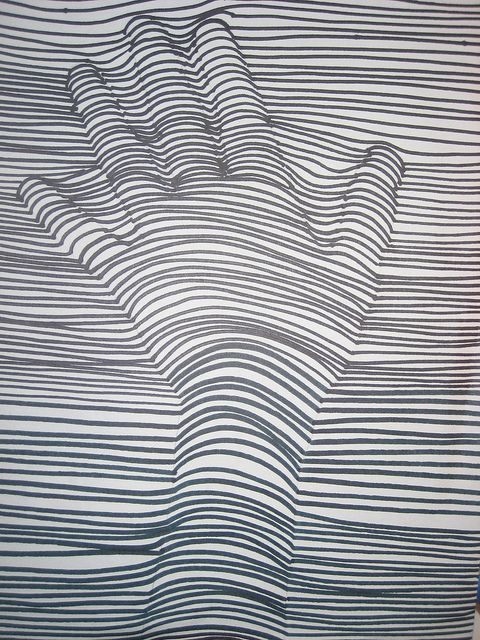
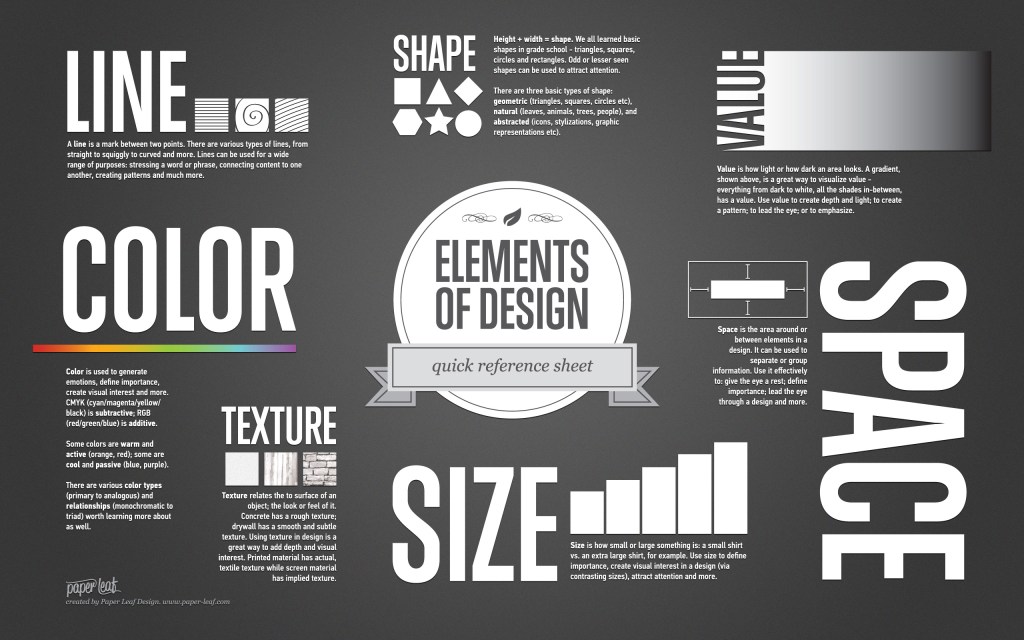
Line – Elements of Design: Line. A line is a form with width and length, but no depth. Artists use lines to create edges, the outlines of objects. A line is created by the movement of the artist’s pen.
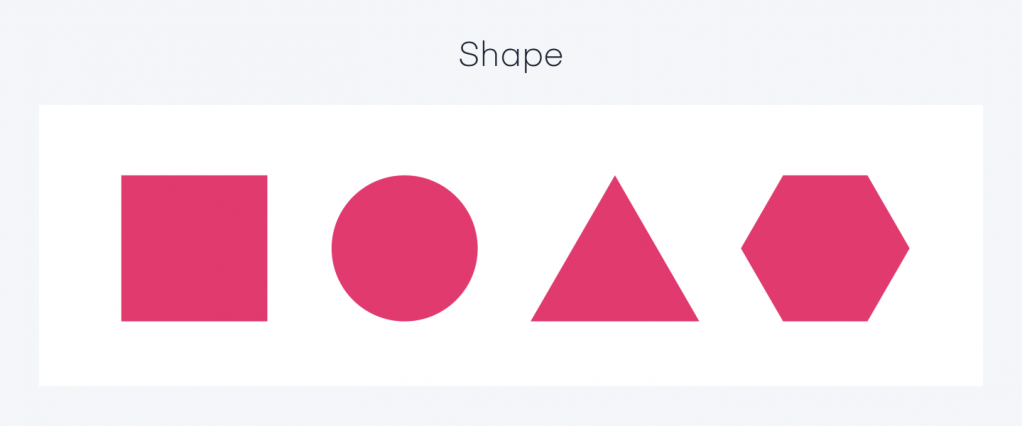
Shape – Elements of Design: Shape. A shape is an enclosed object. Shapes can be created by line, or by color and value changes which define their edges. Shape is considered to be a two dimensional element, while three – dimensional elements have volume or mass.
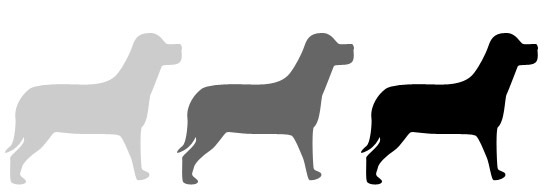
Value – Value is a design element that refers to the relationship between light and dark on a surface or object. Value is also referred to as tone when talking about black and white images. Value is created by a light source that shines on an object creating highlights and shadows.
3D Form – SPACE: Distance, area, volume; physical space independent of what occupies it; absolute space. Space
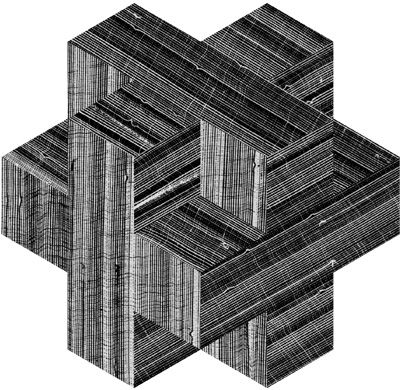
- SPACE: Distance, area, volume; physical space independent of what occupies it; absolute space. Color – Color is an element consisting of hues, of which there are three properties: hue, chroma or intensity, and value. Colour is present when light strikes an object and it is reflected back into the eye, a reaction to a hue arising in the optic nerve.
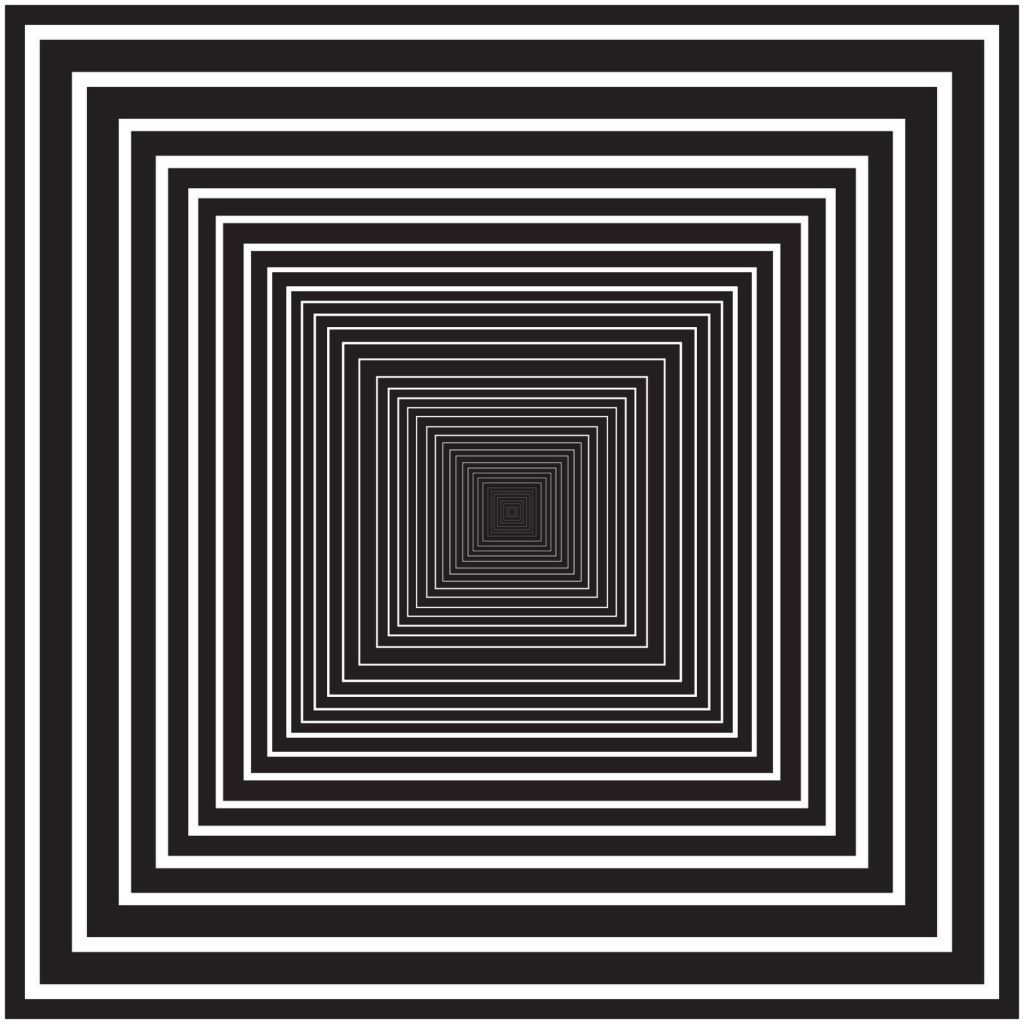
- Type – Type design may be intimidating to many, with terms such as leading, baseline, kerning, ascender, tail, and many more Texture – Texture is an element of design that defines the surfaces of shapes and forms.
Design Prinicples
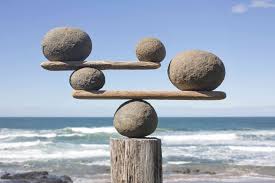
Balance – The principles of design describe the ways that artists use the elements of art in a work of art. Balance is the distribution of the visual weight of objects, colors, texture, and space.
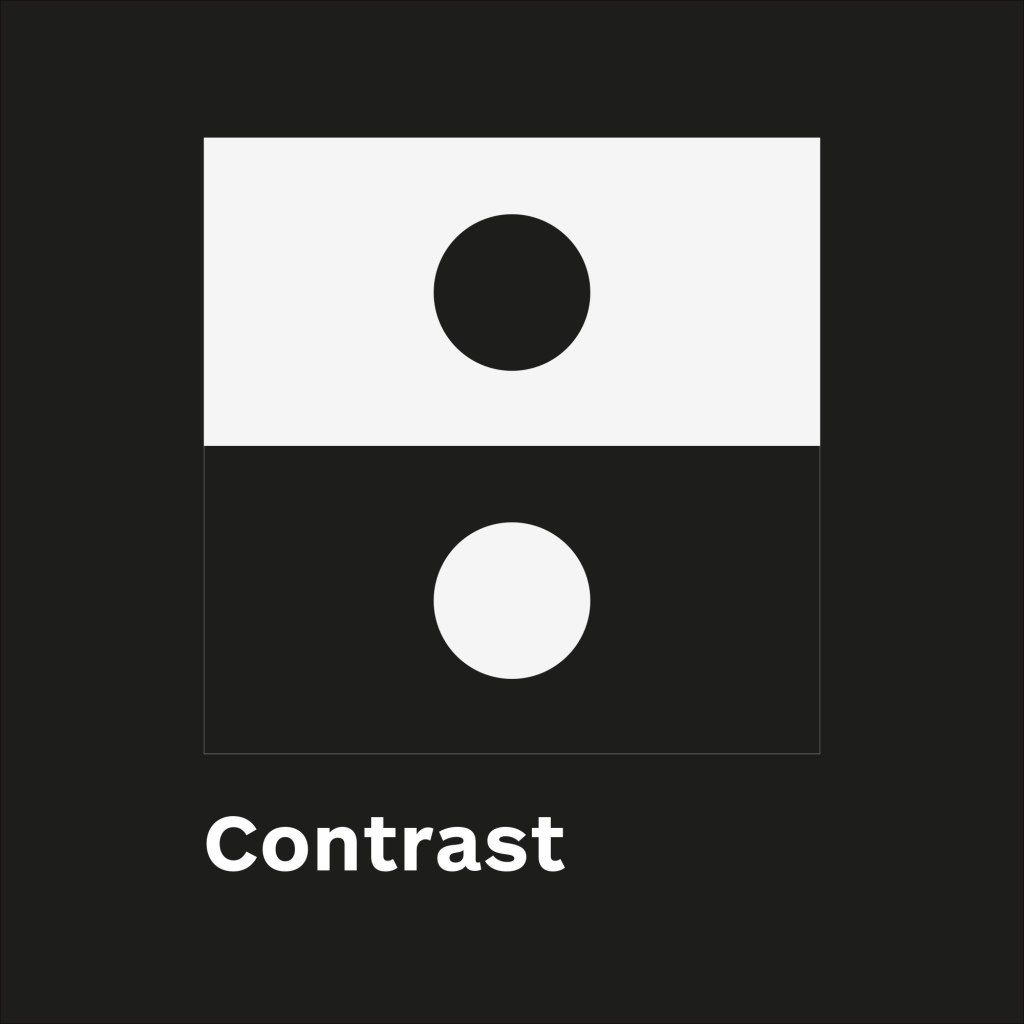
contrast · In graphic design, contrast refers to the presentation of two elements of the design in opposite ways.
emphasis · Emphasis. Emphasis is the art of making a specific element stand out or draw attention to the eye.
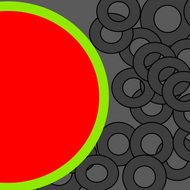
Repetition – The principle of repetition simply means the reusing of th e same or similar elements throughout your design. Repetition of certain design elements in a slide or among a deck of slides will bring a clear sense of unity, consistency, and cohesiveness.
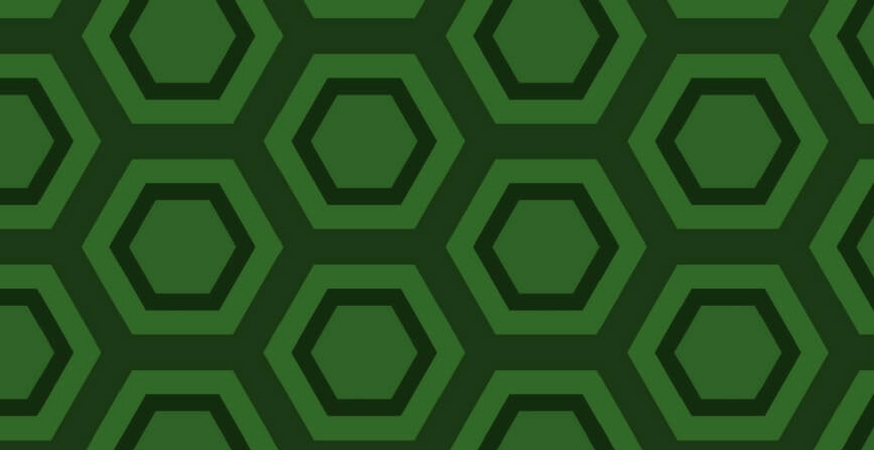
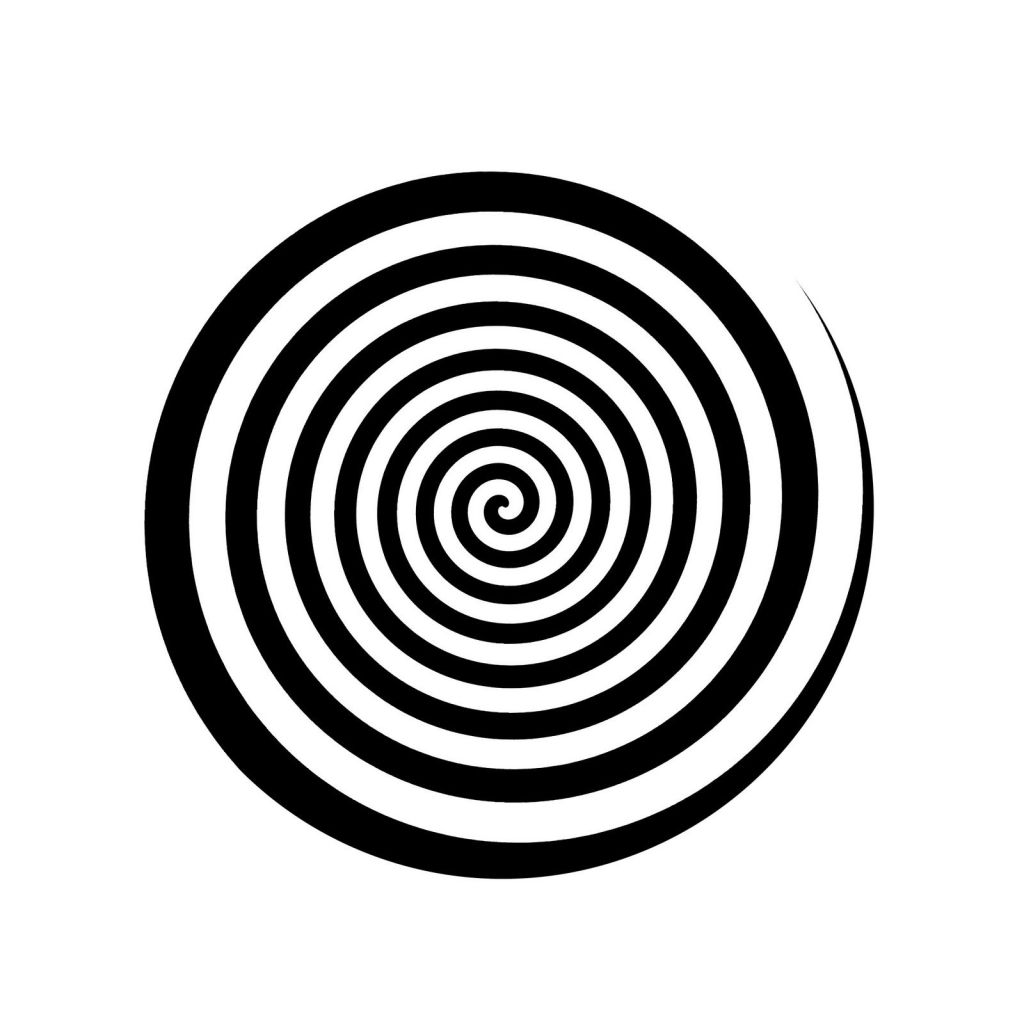
movement – Movement is the path the viewer’s eye takes through the work of art, often to focal areas. rhythm ·
Rhythm is a principle of design that suggests movement or action. Rhythm is usually achieved through repetition of lines, shapes, colors, and more.
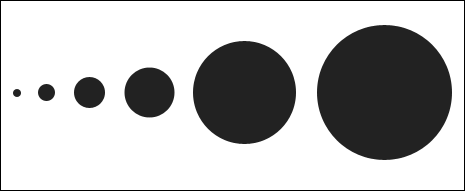
scale and proportion · Principles of Design: Scale and Proportion. Scale and proportion are both design elements that have to do with size.
· variety Principle of Design – Variety. Variety is about varying elements and objects in your image, to avoid making them boring.
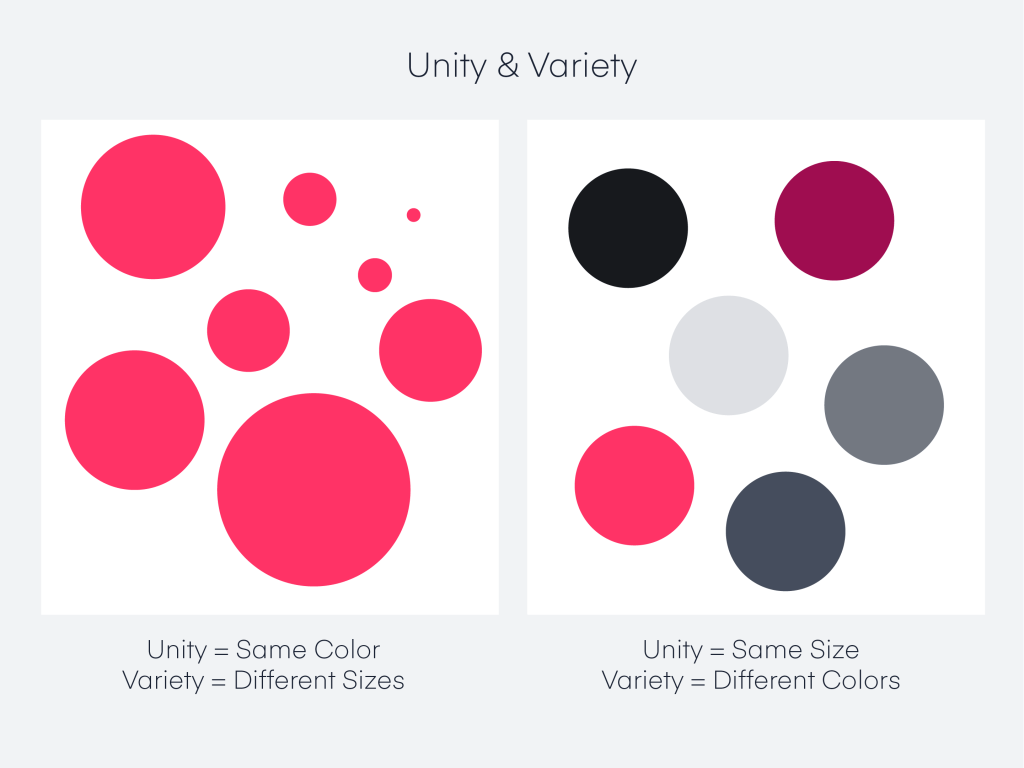
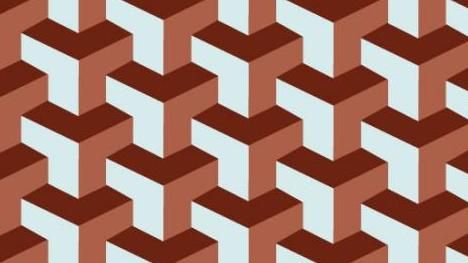
pattern · Principle of Design – Variety. Variety is about varying elements and objects in your image, to avoid making them boring.
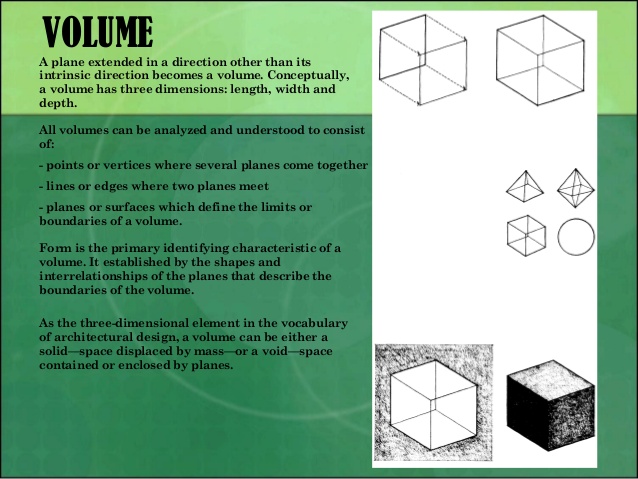
Volume is a three – dimensional form comprising length, width, and depth. Three – dimensional forms contain points (vertices), lines (edges), and planes (surfaces).
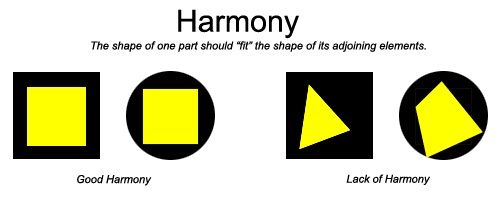
Harmony – Harmony is the visually satisfying effect of combining similar or related elements.
Design process words:
A design brief is a document for a design project developed by a person or team (the designer or design team) in consultation with the client.
Design process
Step 1 – Study the Client Brief. Set goals and context from the brief – the brief is the blue print that leads you to the final design. …
Step 2 – Research, Research, Research. …
Step 3 – Brainstorm. …
Step 4 – Sketch. …
Step 5 – Concept Development. …
Step 6 – Revisions. …
Step 7 – Completion.
Diagram
The five steps that make up the design thinking process: Empathize, Define, Ideate, Prototype, and Test.
Layout
process layout is a design for the floor plan of a plant which aims to improve efficiency by arranging equipment according to its function.
Plan
The engineering design process is a common series of steps that engineers use in creating functional products and processes.
Free Hand
Sketches help to convey ideas, demonstrate functionality, visualize user flow, and illustrate anything that requires human interaction.
Thumbnails
The Generating Ideas part of the design process includes sketching. Thumbnail sketches are how artists and designers can visualize their ideas
Rough
The first full sized sketches of the image are called roughs because they are just that.
OHS
The OSH Regulations have the effect of spelling out specific requirements of the legislation. They prescribe minimum standards and have a general application, or define specific requirements related to a particular hazard or type of work. They may allow licensing or granting of approvals and certificates etc.
https://www.commerce.wa.gov.au/sites/default/files/atoms/files/safe_design_0.pdf
Communication models
Stakeholders are the people and organizations whose attitudes and actions have an impact on the success of your project or your company.
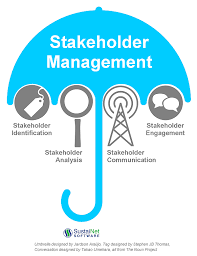
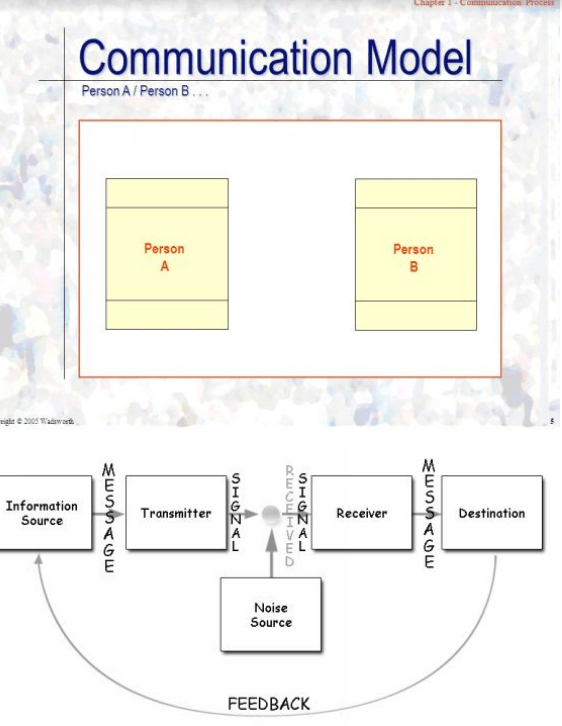
Stereotyping is the result of our tendency to overestimate the degree of association between group membership and psychological attributes.

Copyright
the exclusive and assignable legal right, given to the originator for a fixed number of years, to print, publish, perform, film, or record literary, artistic, or musical material.
Shannon–Weaver model of communication has been called the “mother of all models.”
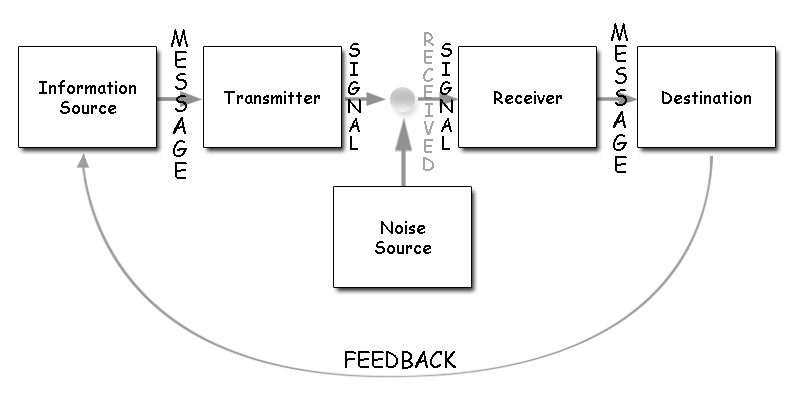
Context specific words:
Three-Dimensional. Having three dimensions (such as height, width and depth), like any object in the real world.
Swatches – Templates
What is rendering in design?
In 3-D graphic design, rendering is the process of add shading, color and lamination to a 2-D or 3-D wireframe in order to create life-like images on a screen.
Tone and line work
Tone is simply the lightness or darkness of an object.
Perspective drawing
There are many types of perspective. To name but a few: aerial perspective, frontal perspective (or 1-point perspective), angular perspective (or 2-points perspective or oblique view), perspectives with 3, 4, 5 and even 6 vanishing points
The Picutres are should be in order of Context, ECT the words and a picutre of what it actually represents
This is picutres for Commication
https://drive.google.com/open?id=1WCVjydHWHARbzyoJhv_tNDwZdf30qn4U
Context
https://drive.google.com/open?id=1asY_vwHq_5583vCFffqet1wdakGzNcrJ
Design Prinicples
https://drive.google.com/open?id=10UpzhlgfeiWZmo77J-6FLRTJnfjwmh_u
Elements of design
https://drive.google.com/open?id=174HfYJopoE9EG-2Ei7m_k0CRpHdJDGTt
 Jack's inquisitive Site